National Natural Gas Safety Week
Fast Facts
- WHAT
- Encourages households that use natural gas to add another layer of protection alarm and learn safety tips to identify a natural gas leak.
- WHEN
- Celebrated each year during the second week of November
- FOUNDER
- Founded in 2026 by New Cosmos USA
- VIBE
- Educational, Awareness, Important
NATIONAL NATURAL GAS SAFETY WEEK
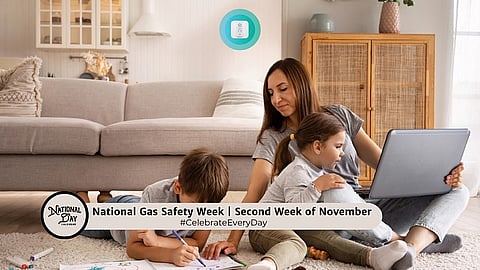
Join a culture of safety the second week of November for National Natural Gas Safety Week! National Natural Gas Safety Week encourages every household that uses natural gas to add another layer of protection with a natural gas alarm and know what to do in the event of a potentially hazardous natural gas leak. This annual observance celebrates that vital role while delivering one important reminder: the rotten-egg smell should not be your only warning.
#NaturalGasSafetyWeek
Natural gas warms our homes, cooks our meals, and powers communities across the country. It is one of America's most reliable and efficient energy sources that serves more than 75 million U.S. households. Unfortunately, unburned natural gas is highly flammable, and an undetected leak can lead to a fire or a catastrophic explosion. Each year, there are more than 550 residential fuel gas explosions, and more than 900 people are killed or injured. Many of those tragedies may have been prevented by an early warning that danger was present.
For decades, detecting a natural gas leak has depended on our sense of smell. Because natural gas has no natural odor, utilities add mercaptan to give it a distinct "rotten egg" scent. While recognizing this smell is crucial, it's only a single layer of safety—and one that doesn't work for everyone:
Gas Detection: Why Smell Alone Won't Protect You
-
Age: Our sense of smell naturally weakens as we get older, and many older adults cannot reliably detect the odorant.
-
Health conditions: Colds, allergies, sinus problems, certain medications, smoking, and some neurological conditions can dull or erase the sense of smell.
-
Sleep: No one can smell a leak while asleep. At night, gas can build up unnoticed with no one awake to catch the warning.
Natural Gas Safety Education
Early detection, prompt action, and public awareness are key to preventing natural gas leaks and explosions. Because natural gas safety is a shared responsibility, industry stakeholders—including utilities, contractors, plumbing and HVAC professionals, and first responders—work collaboratively to reach and educate consumers. National Natural Gas Safety Week reinforces these efforts so that households and businesses can utilize natural gas securely. Please visit https://www.naturalgassafetyawarenessweek.org/ to explore participation opportunities and support best practices in safety education.
3 Pillars of Natural Gas Safety
-
Know the Warning Signs - Learn the rotten-egg smell of mercaptan and take it seriously every time. Looking for inexplicably dead vegetation near outdoor gas lines, as well as blowing dirt, bubbling water in puddles, or unusual hissing or roaring sounds near gas appliances, pipes, or meters, can help find areas that need immediate attention.
-
Add Another Layer With Early Detection - While smoke and carbon monoxide (CO) alarms are household staples, carbon monoxide and natural gas leaks are different hazards. Standard CO alarms do not detect natural gas leaks. Installing a specialized natural gas alarm high on walls in rooms with gas-fueled appliances will provide early warnings before gas reaches dangerous levels. An alarm gives everyone in the home, including older family members, people with a reduced sense of smell, and those who are asleep, the same early warning.
-
Know How to Respond - If you smell gas, hear an alarm, or suspect a leak, evacuate immediately. Do not touch electrical switches, light matches, or use phones inside the building, as even a tiny spark can ignite the gas. Once at a safe distance outside, call 911 and your local utility provider right away.
National Natural Gas Safety Week shifts the national conversation from reaction to prevention. Rather than focusing on safety after a tragedy occurs, the week calls on everyone to commit to preparedness, early detection, and community care.
HOW TO OBSERVE NATIONAL NATURAL GAS SAFETY WEEK
-
Add another layer of protection. Install natural gas alarms high on walls in rooms with gas appliances. Paired with smoke and carbon monoxide alarms, a gas alarm will help complete a safe home.
-
Look out for loved ones. Help older relatives, neighbors, and anyone with a reduced sense of smell get a natural gas alarm installed in their home.
-
Inspect gas appliances. Schedule a professional inspection in your home or workplace if anything seems off or you are unsure if there is a natural gas leak.
-
Make an emergency plan. Walk through an evacuation plan with your family or coworkers so everyone knows to get out first and call 911 once away from the area.
-
Get involved as a professional. Visit https://www.naturalgassafetyawarenessweek.org/ to find resources about natural gas safety.
-
Educate yourself. Learn about local standards that require natural gas alarms in residential buildings, and advocate for proactive safety policies in your community.
-
Spread the word. Share safety tips, graphics, and early-detection facts on social media using the hashtag #NaturalGasSafetyWeek.
NATIONAL NATURAL GAS SAFETY WEEK HISTORY
DeNova Detect, by New Cosmos USA, submitted National Natural Gas Safety Awareness Week in 2026 to fill a crucial gap in natural gas safety: too many households depend on smell alone to warn them of a leak. The National Day Calendar® Registrar approved this important awareness week to be observed annually during the second week of November.
About the Founder
New Cosmos USA is rooted in more than 65 years of gas detection innovation, with a long history of developing gas detection technologies focused on one purpose: protecting people, pets and property. DeNova Detect was founded to extend that commitment across the United States, emphasizing education, innovation, and accessibility in natural gas safety solutions.