NATIONAL DAY OF CINEMATIC SOUND
Fast Facts
- CELEBRATION
- A celebration for the art of sound in your favorite films
- WHEN
- Celebrated each year on August 6
- FOUNDER
- Founded in 2026 by the Motion Picture Sound Editors
- VIBE
- A symphony of emotions
NATIONAL DAY OF CINEMATIC SOUND
National Day of Cinematic Sound takes place every year on August 6 to celebrate one of the most transformative technological and creative leaps in art history--sound in film. This day recognizes that a film's sound design is not background noise--it tells the story through a full range of emotions: happy and sad, thrills and chills, passion and elation.
#DayOfCinematicSound
Cinematic sound is a unique experience only available in theaters. It is the physical energy that fills the room, thrilling, frightening, and emotionally moving audiences in ways a screen alone never could. Sound is what makes you feel the story—the hair-raising silence before a scare, the swelling strings behind a first kiss, the rumble that puts you inside the action instead of just watching it.
August 6th - A History of Sound in Cinema
August 6th is a special celebration day in the history of sound in cinema, as it commemorates the first time a feature film premiered with images accompanied by synchronized audio - music and sound effects - in 1926. The film was Don Juan, starring John Barrymore and Mary Astor. A new technology called the Vitaphone (whose name combines Latin and Greek roots meaning "living sound") played back those sounds for the audience’s enjoyment.
For decades, movies existed in silence since the birth of cinema in the 1890s. Despite being called "silent," movies were almost never experienced in actual silence. Sound was an essential, live component of the silent movie experience. It varied depending on the size and budget of the venue. Some venues hired pianists and organists, while some hired full orchestras. Audiences cheered for heroes, hissed at villains, and moved freely in and out of shows. While silent films were undeniably brilliant, sound revolutionized the art of movie making overnight.
From the roar of an explosion to the swell of a score to the quiet creak of a floorboard, National Day of Cinematic Sound honors the artists and technology that turn moving pictures into fully immersive experiences.
Optical Sound
A microphone converted actor voices into electrical signals. These signals varied the brightness of a glow-lamp. As unexposed film ran past this flickering lamp, it printed a tiny, variable-density optical soundtrack alongside the image frames.
Fantasound
Fantasound used a revolutionary two-film projection system. It pushed optical sound film technology to its absolute physical limits, introducing dynamic expansion, automatic sound panning, and spatialized speaker arrays to theaters over a decade before modern surround formats emerged.
The first film to use Fantasound was Walt Disney's groundbreaking masterwork Fantasia, starring Mickey Mouse.
LCR (Cinemascope)
CinemaScope used magnetic recording technology borrowed from post-WWII tape recorders. Using four thin stripes of iron-oxide magnetic emulsion, the strips were glued (striped) directly onto the 35mm release print itself with two outside the sprocket holes and two inside.
The first film to use CinemaScope was the American Biblical film The Robe, starring Richard Burton, Victor Mature, and Jean Simmons.
Sensurround
Sensurround was a specialty audio format designed not for directional fidelity, but for visceral physical sensation. Instead of focusing on discrete channels, Sensurround introduced massive, low-frequency infrasonic vibrations into movie auditoriums, literally shaking theatergoers in their seats to simulate the impact of a real earthquake.
The first film to use Sensurround was Earthquake, starring Charlton Heston and Ava Gardner.
Dolby Stereo (LCRS)
Dolby Stereo revolutionized cinematic sound. It solved the economic problem by matrixing four audio channels of Left, Center, Right, and Surround (LCRS) into a standard, inexpensive, two-channel optical sound track.
The first film to use Dolby Stereo (LCRS) was A Star is Born, starring Barbra Streisand and Kris Kristofferson.
Cinema Digital Sound (CDS) 5.1
Cinema Digital Sound (CDS) was the world’s very first 5.1 digital audio format for movie theaters. It delivered uncompressed-quality, 16-bit digital surround sound to 35mm and 70mm prints.
The first film to use Cinema Digital Sound (CDS) 5.1 was Dick Tracy, starring Warren Beatty, Al Pacino, Madonna, and Dustin Hoffman.
Sony Dynamic Digital Sound (SDDS) 7.1
Sony Dynamic Digital Sound (SDDS) 7.1 added two extra speakers behind the screen to create a dense, highly localized front soundstage for massive 70ft+ wide screens. SDDS was printed as high-density digital micro-dots along both outer edges of the 35mm film strip (outside the sprocket holes).
The first movie to use Sony Dynamic Digital Sound (SDDS) 7.1 was Last Action Hero, starring Arnold Schwarzenegger.
Dolby Digital (SR-D)
Dolby Digital (SR-D) marked cinema’s transition into discrete digital surround sound. Rather than relying on phase-matrix tricks to squeeze surround audio into a two-channel stereo mix, Dolby Digital delivered six fully independent (discrete) audio channels printed directly onto standard 35mm film stock.
The first film to use Dolby Digital (SR-D) was Batman Returns, Michael Keaton, Michelle Pfeiffer, Danny DeVito, and Christopher Walken.
Digital Theater Systems (DTS) 5.1
DTS (Digital Theater Systems) debuted in June 1993. DTS separated the audio hardware from the physical film print. DTS benefited from far greater data bandwidth than Dolby Digital: Lower Data Compression, Higher Audio Fidelity, CD-Quality 44.1 kHz Sampling.
The first film to experience Digital Theater Systems (DTS) 5.1 was Jurassic Park, starring Jeff Goldblum, Laura Dern, and Sam Neill.
Dolby Digital EX (6.1)
Dolby Digital EX (6.1) introduced a back surround channel (6.1). Rather than altering the physical 35mm film layout or changing the bitstream structure of standard Dolby Digital (AC-3), Dolby used the same 4-2-4 matrix encoding trick they pioneered with 1976 Dolby Stereo.
The first film to use Dolby Digital EX (6.1) was Star Wars: The Phantom Menace, starring Liam Neeson, Natalie Portman, and Ewan McGregor.
AURO 3D
AURO 3D was the pioneer that introduced true 3D height-channel audio to commercial cinemas. It tackled spatial audio by creating a channel-based, three-tiered vertical hierarchy—adding vertical layer structure to traditional 2D sound fields. Auro-3D built upon existing surround sound by adding vertical height layers directly above the audience, organizing speakers into three distinct horizontal planes.
The first film to use AURO 3D was Red Tails, Terrence Howard and Cuba Gooding Jr.
Dolby Atmos
Dolby Atmos represented the most radical redesign of cinema sound since the invention of multi-track audio. Instead of routing audio into fixed, pre-assigned speaker channels (like 5.1, 7.1, or SDDS), Dolby Atmos abandoned traditional channel-based mixing entirely and introduced 3D Object-Based Audio and overhead height channels to cinema auditoriums.
The first film to use Dolby Atmos was the Pixar animation Brave.
Every movie lover recognizes the icons of classic cinema. The clean snap of dialogue, sweeping orchestral scores that swell at the climax of the plot, and delicate ambient sounds that transport you directly into a story. Because actors couldn't speak during the silent film era, stories were conveyed through printed title cards between scenes and actors expressing emotion with body language. National Day of Cinematic Sound celebrates innovation of sound, the creativity of vocal emotion, and musical cues to highlight suspense, romance, and even tragedy.
Microphones were hidden in flower vases?
During the early years of sound cinema, microphones were bulky, stationary, and had short pickup ranges. Sound crews hid microphones in potted plants, light fixtures, or furniture, forcing actors to speak directly toward specific props while standing perfectly still. Once live microphones were on set, absolute silence was enforced, ending the era of "real-time" noise for on-set directing.
National Day of Cinematic Sound on August 6 invites movie lovers everywhere to celebrate the art of sound in their favorite films. Grab your family and friends and immense yourself in the best theater you can find! Listen with intention and enjoy the grandeur of the cinematic soundtrack created for your experience. It's time to skip the small screen today—sound like this deserves a big room and a great system.
HOW TO CELEBRATE NATIONAL DAY OF CINEMATIC SOUND
-
Focus on the Sound: Enjoy a favorite classic movie with legendary sound design and listen to how the sound intensifies every narrative of the film. A few that come to mind are Star Wars, Apocalypse Now, The Birds or Once Upon a Time In the West.
-
Visit the Cinema: Experience a modern release in a theater equipped with state-of-the-art surround sound or Dolby Atmos to appreciate how far audio technology has come.
-
#DayOfSoundCinema: Start a conversation about the timeline of technology in cinema on social media using the hashtag #DayOfCinematicSound.
BEHIND NATIONAL DAY OF CINEMATIC SOUND
National Day of Cinematic Sound was submitted by the Motion Picture Sound Editors (MPSE) to eternalize this moment in film history and to celebrate the art of cinematic that has shaped moviegoing ever since. The National Day Calendar Registrar approved this day to be celebrated each year on August 6.
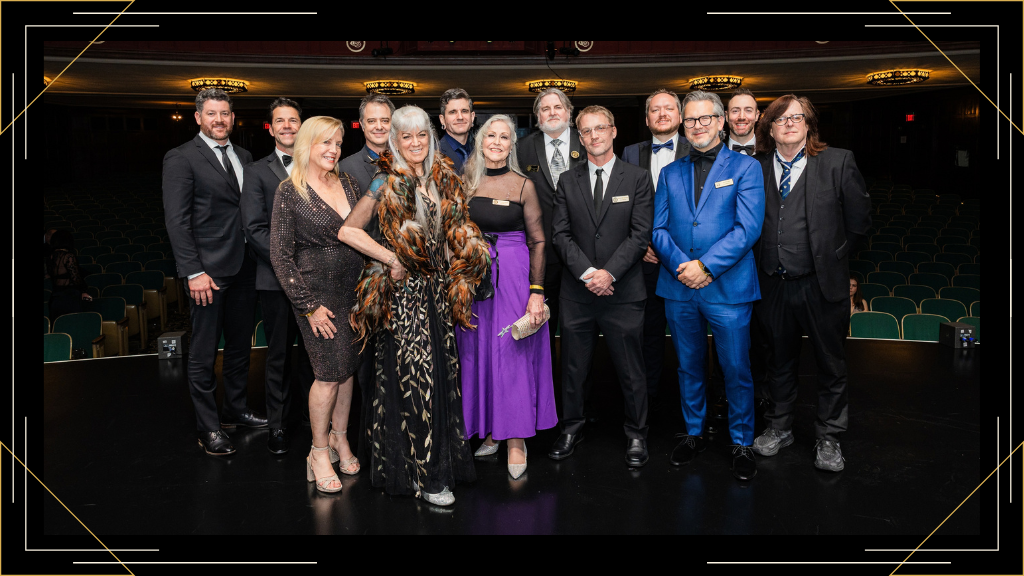
About the Founder
The Motion Picture Sound Editors is the premiere organization for sound editing professionals, dedicated to educating the public and the entertainment industry of the artistic merit of sound editing. Founded in 1953, MPSE strives to celebrate community and the creative and technical advances in sound. Through the efforts of its volunteer board of directors and dedicated international membership, MPSE is able to approach vendors, manufacturers, and organizations with a targeted group of high-end users that are able to provide constructive feedback and promotion.
In addition to the artistry of the sound mixers, editors, designers, and Foley artists who have dazzled you for a century, their craft wouldn’t be possible without Important technical milestones in cinema sound.
For more information about their members and partnership, visit the Motion Picture Sound Editors website to learn about their unique roster of creative talent and industry mainstays.
Shop this day
What's Next