Fire Prevention Day
Fast Facts
- WHAT
- Serve as a simple reminder to make a routine plan in case of a fire
- WHEN
- Celebrated each year on October 9 during Fire Prevention Week
- CREATOR
- Created in 1911 by the Fire Marshals Association of North America
- VIBE
- Empowerment, Responsibility, and Honorary
FIRE PREVENTION DAY
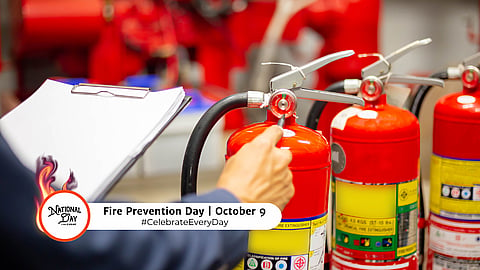
Every year on October 9th, communities across the nation observe Fire Prevention Day. This important observance occurs during National Fire Prevention Week to serve as an essential reminder to take simple proactive steps by performing routine checks and creating a family escape plan in case of a fire.
#FirePreventionDay
Fire Prevention Day was born from tragedy and its history is one of sadness. Established 40 years after the Great Chicago Fire of 1871, Fire Prevention Day was created to change municipal building codes and fire safety standards nationwide. October 9th stands as a dedicated moment to honor the bravery of firefighters and recommit ourselves to fire safety education.
The Great Chicago Fire began the evening of October 8 in or near a small barn owned by Patrick and Catherine O'Leary on DeKoven Street on the city's South Side. A neighbor noticed the fire and sent a "warning" but the alarm was delayed. When a watchman in the courthouse spotted the fire, he notified the fire department. Unfortunately, the watchman also misjudged the location and sent the fire engines a mile away from the actual fire.
Reasons the Great Chicago Fire Spread so Quickly
-
Exhausted Firefighters - The Chicago Fire Department had fought a multi-block fire the previous night (October 7) and was severely fatigued with damaged equipment.
-
Strong Winds - Strong south-southwesterly winds blew across Illinois on October 8, causing the flames to spread rapidly toward the heart of the city.
-
A Wooden City - Almost everything was made of wood, including sidewalks, elevated walkways, and pine-block street paving.
-
Extreme Drought - Less than 1 inch of rain fell between July and October, leaving every wooden surface bone-dry.
The fire burned quickly and the hot air began to create "fire whirls" or tornados of flame. Burning embers were lifted high into the air. As the embers flew through the sky, they latched on to main branches of the Chicago River, setting rooftops on fire across the river. Water resources quickly depleted in the city to fight the ongoing fire. Rain finally fell on the night of October 10, dousing the fire. The fire caused $200 million in damage. Around 17,000 structures were destroyed throughout the city, leaving 100,000 people homeless.
WAYS TO PARTICIPATE IN FIRE PREVENTION DAY
-
Walk through your living or workspace to check fire extinguishers, smoke alarms, and potental electrical and heating hazards.
-
Drop off a thank-you note, a meal, or a gift card for a meal at your local fire station to show appreciation for their service.
-
Teach children how to "Stop, Drop, and Roll" and make sure they know how to call 911 in an emergency.
-
Many firefighters are volunteers. Learn how to become a volunteer firefighter in your community.
-
Share your support and fire safety tips on social media using the hashtag #FirePreventionDay!
HISTORY BEHIND FIRE PREVENTION DAY
The Fire Marshals Association of North America sponsored the first national observance of Fire Prevention Day in 1911 on the 40th anniversary of the Chicago fire, setting October 9 as a national reminder for home and workplace safety. The October 9th date stands as a dedicated moment to honor the bravery of firefighters and recommit ourselves to fire safety education.

Shop this day
What's Next