National Food Allergy Day
Fast Facts
- WHAT
- Raises awareness, education, and action for children living with food allergies in the U.S.
- WHEN
- Each year on January 16
- FOUNDED
- Founded in 2026 by the Food Allergies & Asthma: Elijah-Alavi Foundation
- VIBE
- Action, Awareness, Education
NATIONAL FOOD ALLERGY DAY
National Food Allergy Day on January 16 serves as a time to elevate awareness, education, and action for the 5.6 million children living with food allergies in the U.S.
#NATIONALFOODALLERGYDAY
National Food Allergy Day encourages families, schools, and communities to learn the signs of allergic reactions, understand how to respond, and ensure that lifesaving medication such as epinephrine is accessible and used immediately during an emergency. Education, preparedness, and compassion work together to create safer environments for children.
National Food Allergy Day
Reminds communities that protecting and advocating for children with food allergies requires knowledge, preparation, and compassion.
What should be ordinary childhood moments, such as childcare, school, playdates, and celebrations, can carry real risk. For parents, managing a child’s food allergy is an ongoing source of stress that requires constant awareness and vigilance. Everyday activities like birthday parties, playdates, dining out, or even grocery shopping can feel overwhelming. This level of responsibility can lead to heightened anxiety and, at times, a sense of isolation, as simple outings that many families take for granted, like a quick trip to a bakery, are not always safe or possible.
For children, living with a food allergy can affect both safety and their sense of inclusion. Many want to fully participate in everyday activities, but food restrictions can make this challenging. For example, being unable to eat certain foods at celebrations or needing allergen-aware seating at school can sometimes lead to feelings of being left out.
Food allergies are also common, affecting about 1 in 13 children in the United States, which means nearly two children in every classroom. In addition, research shows that children with food allergies may face bullying related to their condition, ranging from teasing to more serious behaviors. These experiences highlight the importance of awareness, education, and creating inclusive environments where every child feels safe and supported.
It Takes a Village
Elijah’s Law was named after 3-year-old Elijah-Alavi and was first passed in New York State in 2019. Since then, it has been adopted in several other states, strengthening food allergy safety and emergency preparedness in childcare settings. We hope to one day bring this critical protection to federal legislation, honoring Elijah’s legacy and protecting more children from life-threatening allergic reactions.
The Protecting Children with Food Allergies Act
The Protecting Children with Food Allergies Act was signed into law in January 2026, putting schools at the front lines of food allergy management. The Act helps parents feel less anxious about how their child is being protected and gives schools the ability to train personnel on food safety.
As of 2026, all school food service personnel must receive annual training on how to prevent, recognize, and respond to allergic reactions. This is huge! It moves the responsibility from just the nurse to the entire cafeteria staff. Teachers have to manage safe classrooms for students who have allergies, while balancing the rights of all students.
SUPPORT AND CELEBRATE NATIONAL FOOD ALLERGY DAY
Supporting National Food Allergy Day is about more than just checking labels; it's about empathy. It's about making sure every kid is included and feels safe.
-
Wear teal and purple to show support for food allergy awareness.
-
Learn about the top 9 most common food allergens that cause allergic reactions:
milk
eggs
peanuts
tree nuts
wheat
fish
shellfish
soy
sesame
Knowing if a child is allergic to any of these will help you read food labels and understand “may contain” and “made in a facility” statements. It is also essential to recognize the signs and symptoms of an allergic reaction to keep children safe.
-
Host a food allergy awareness fundraiser to support organizations like the Elijah-Alavi Foundation. Fundraise by hosting a food-allergy awareness fundraiser, such as an allergy-safe, inclusive bake sale or an event to support organizations and help advance education, advocacy, access to epinephrine and life-saving initiatives.
-
Display a teal pumpkin sign to show your home is a "safe zone" for kids with food allergies. Even though the teal pumpkin is used during Halloween, the teal pumpkin symbol can be used year-round by displaying a picture of the teal pumpkin on your door.
-
Educate Communities by providing childcare, schools, restaurants, sports teams, and workplaces with educational materials, such as posters and information on common allergens and emergency actions.
-
Take the challenge. Each one, teach one: Watch a video or teach someone how to use an FDA-approved epinephrine device. Spending just five minutes could help save a life in a public place or school.
-
Wear Elijah’s colors, navy blue and purple, in his honor. awareness, and #elijahsecho.
-
Support organizations that fund research and clinical trials that are working toward a cure:
Asthma and Allergy Foundation of America (AAFA)
Food Allergy Science Initiative (FASI)
Elijah-Alavi Foundation
Food Allergy Fund (FAF)
Allergy and Asthma Network (AAN)
Food Allergy Research and Education (FARE )
The Center for Food Allergy and Asthma Research (CFAAR)
-
Share your support and share your family story about food allergies on social media using the hashtag #NationalFoodAllergyDay.
HISTORY BEHIND NATIONAL FOOD ALLERGY DAY
National Food Allergy Day was submitted by the Food Allergies & Asthma: Elijah-Alavi Foundation in 2026 and approved by the National Day Calendar Registrar to be celebrated each year on January 16th.
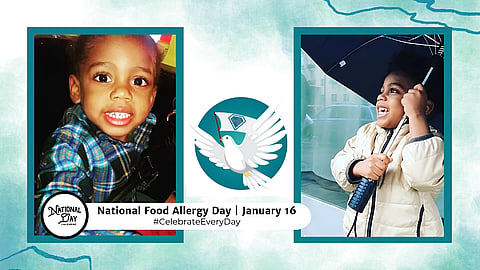
The importance of National Food Allergy Day is deeply connected to the story of Elijah-Alavi Silvera, a 3-year-old boy who tragically lost his life after suffering a severe allergic reaction after being given a food he was allergic to while in childcare. Elijah’s passing revealed how critical education, prevention, and emergency preparedness are in environments where children should feel safe. His life and legacy continue to inspire efforts across the country and around the world to strengthen food allergy safety and awareness.
About the Founder
Through the work of the Elijah-Alavi Foundation, Elijah’s story has helped spark national and global conversations and meaningful change. This work has led to the passage of food allergy safety legislation known as Elijah’s Law, while advancing education and training for educators, childcare providers, and community leaders on food allergy safety. It also emphasizes the importance of recognizing the signs of an allergic reaction, responding quickly with epinephrine as the first-line treatment for anaphylaxis, and calling 911 immediately. These efforts underscore why National Food Allergy Day is so important. Awareness, education, and preparedness truly save lives.
The message for National Food Allergy Day represents these words from Elijah-Alavi, “Make a Hand. Make a Hug. Make a Kiss,” Which reflects the heart of this movement.
Make a Hand represents clean hands, awareness, and prevention, including understanding cross-contact and the importance of proper handwashing to reduce exposure to allergens.
Make a Hug symbolizes inclusion, reminding children with food allergies that they belong to and should feel safe in their communities.
Make a Kiss represents love, care, and the reassurance that adults around them are prepared to protect them in an emergency.
At its core, National Food Allergy Day is about protecting lives while preserving childhood. It reminds us that safety and love can exist together. Through awareness, kindness, and informed action, the message behind Make a Hand. Make a Hug. Make a Kiss. helps communities create spaces where children with food allergies feel safe, supported, and valued. Elijah-Alavi’s life continues to inspire this mission and serves as a reminder that awareness and compassion can lead to lasting change.
Shop this day
What's Next