FASHION REVOLUTION DAY
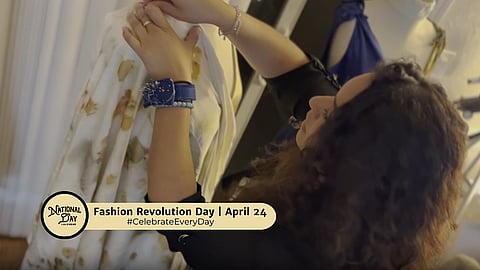
FASHION REVOLUTION DAY
April 24 is Fashion Revolution Day to honor the victims of the 2013 Rana Plaza Factory in Dhaka, Bangladesh, and promotes ethical practices in the fashion industry.
#FashionRevolutionDay
The fashion industry is one of the largest industries in the world. Globally, the fashion market is valued at an estimated $1.8 trillion to $1.9 trillion. Over 100 billion garments are produced every year by around 70 million people--from cotton farmers to distribution logistics to sales.
Fashion is a universal language everyone speaks. It helps people build their identity in different cultures and promotes artistic innovation. Brands are constantly changing and adapting to style and how they produce garments. Unfortunately, the fashion industry is responsible for around 10% of the global carbon emissions. Approximately 85% of all textiles produced end up in landfills each year, creating environmental hazards globally.
Many fashion designers are opting to create clothing that is environmentally safe, hoping to conserve and restore the environment while providing fashion forward clothing. Designers are now creating clothing from recycled ocean plastics, and building a booming secondhand resale market that makes thrifting chic and accessible.
Luxe Label
Natalie Maharaj is an emerging slow luxury womenswear label based in California. Raised in South Africa during a time of deep social division, Natalie Maharaj found freedom in creativity, a space for expression at the age of 16. What started out as a design for her prom dress, Natalie is creating timeless pieces that can be worn any time. Natalie's designs are limited-edition garments using vintage or repurposed textiles and natural fabrics reimagined into modern, elegant silhouettes. Each of her designs are consciously crafted using thoughtfully sourced silk and repurposed textiles. Natalie is doing her part by reducing her environmental footprint in the fashion industry.
HOW TO OBSERVE
Organizers encourage grassroots and social media involvement. They say one of the main ways to get involved is through social media, asking people to use the all-important #whomademyclothes hashtag.
The group Fashion Revolution recommends this process: take a photo of your clothing label during Fashion Revolution Week, post the photo on social media, and ask the brand of the clothing, #whomademyclothes? Participants can tag the brand in the photo with #whomademyclothes so they can see your question. Share your photo on Instagram during Fashion Revolution Week (22nd-28th April) and encourage friends to do the same.
Here’s the website to see how to mark the day.
Watch the documentary “The True Cost.” https://truecostmovie.com/
Follow on social media with #fashionrevolutionday or the official hashtag of the industry: #WhoMadeMyClothes, #fashionrevolution
Story Behind Fashion Revolution Day
On April 24, 2013, a garment factory in Dhaka, Bangladesh collapsed, killing 1,133 workers and injuring 2,500 more. This was the deadliest disaster in the history of the clothing manufacturing industry. The Rana Plaza building was known to have been built with substandard materials under faulty conditions, yet the factory remained very active up until the deadly collapse.
Five months earlier, another garment factory in Bangladesh collapsed killing 110 people.
The first Fashion Revolution Day was April 24th, 2014. In 2016, it expanded into Fashion Revolution Week. Today, the day is sponsored by and promoted by the non-profit group called Fashion Revolution, a global movement with teams in over 100 countries around the world. What began as a social media campaign has brough attention to the devastating effects of fast fashion on the people who make the clothing.
Fashion Revolution Day was created by two founders: the Fashion Revolution group and Carry Somers and Orsola de Castro.
Shop this day
What's Next